Gum Disease Treatment
Henderson, Nevada


If your gums bleed when you floss, you might think the floss is the problem. However, if you notice regular bleeding, swollen gums, or bad breath that doesn't go away after brushing, these could be signs of inflammation. Gum disease usually doesn't cause pain at first, so it can be easy to overlook while the tissue and bone supporting your teeth are changing.
At George Harouni, DDS, gum disease treatment in Henderson starts with a careful exam of your gums, the spaces around your teeth, and the bone that supports them. Some people only need a regular cleaning and better plaque control at home. Others may need scaling and root planing, sometimes using the PerioScope to see deposits below the gumline. The right treatment depends on what we find during your exam.
If you have ongoing bleeding or have been told you need a deep cleaning, schedule a gum health check at our Henderson office.
Gum disease treatment focuses on reducing inflammation and infection in your gums and the tissues that support your teeth. For early gingivitis, a professional cleaning may be enough. For periodontitis, scaling and root planing are often needed, along with regular maintenance. Dr. Harouni checks for bleeding, pocket depths, tartar buildup, and bone support to decide on the best treatment for you.
Plaque is a sticky film of bacteria that builds up on your teeth. Once it hardens into tartar, brushing alone can't remove it. If tartar forms below the gums, bacteria can cause deeper pockets and damage the tissues that hold your teeth in place. Treatment removes these deposits and helps your gums heal.

Best for: Gingivitis, periodontitis, bleeding gums, and periodontal pockets
Treatment: Professional cleaning or scaling and root planing, based on diagnosis
Technology: PerioScope imaging may assist below-gumline cleaning
Comfort: Local anesthetic is commonly used for deep cleaning
Recovery: Temporary tenderness and tooth sensitivity are possible
Follow-up: Gum measurements and an individualized maintenance schedule
Gingivitis is the early, reversible stage. Gums may look red or swollen and bleed with brushing or flossing, but the supporting bone hasn't been lost. A professional cleaning and consistent home care can often bring the inflammation under control.
Periodontitis develops when inflammation affects the tissues and bone securing the teeth. Pockets deepen, attachment is lost, and bone can recede. The damage already done to those supporting structures does not simply reverse after a cleaning, although treatment can control the disease and help protect the teeth that remain.
Signs worth checking include:
Pain is not always a good way to judge how serious gum disease is. Dr. Harouni checks your gums with a special probe to measure pocket depths and bleeding, looks at dental X-rays if needed, and checks for changes in the bone. These findings help us tell if you need routine care or deeper treatment for periodontitis.
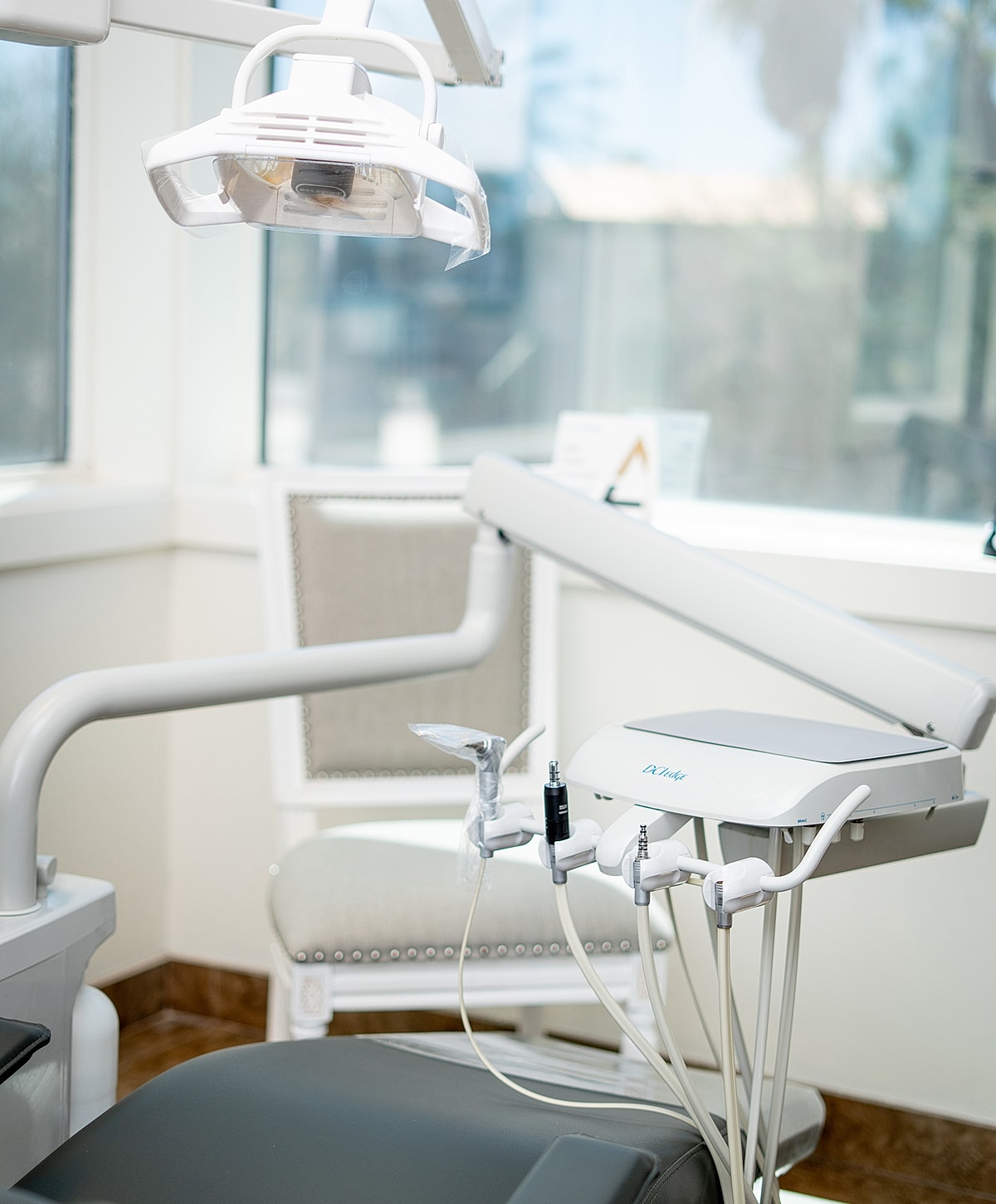
The first step is an exam. Dr. Harouni and the hygiene team check your gum measurements, look for buildup, review X-rays if needed, and consider your medical history. They will explain whether a regular cleaning is enough or if you need treatment below the gumline.
Scaling and root planing is a common first step for treating periodontitis without surgery. Antibiotics or other treatments are not always needed and are considered case by case. If your gum disease is too advanced for nonsurgical care, Dr. Harouni will talk with you about specialty treatment options instead of promising that one cleaning will fix everything.

A regular deep cleaning depends a lot on the clinician’s skill and their sense of touch with the instruments. At our Henderson office, our hygiene team can also use the PerioScope, a small fiber-optic camera that gives a close-up view inside certain gum pockets during treatment.
That view can help the clinician identify residual tartar on root surfaces that are difficult to assess by touch alone, particularly around complex tooth anatomy. It is a practical advantage when the goal is to clean below the gumline while preserving healthy tissue.
The PerioScope helps us see better during cleaning, but it is not a cure for periodontitis. Long-term control depends on how severe the disease is, how you respond to treatment, daily plaque control, and regular maintenance. Ask Dr. Harouni if PerioScope-assisted care is right for you.
Request an appointment if you'd like to understand your pocket measurements and the treatment options available.
Anyone with persistent gum bleeding, swelling, recession, loose teeth, or a history of periodontal disease should be evaluated. You may also need an assessment if a hygienist has measured deep pockets, you've gone several years without a dental cleaning, or you're planning implants or other restorative work.
Dr. Harouni looks at your pocket measurements, bone levels, oral hygiene, tobacco use, diabetes, medications, and other health factors before recommending treatment. If you have mild gingivitis, you may only need a regular cleaning. If you have attachment loss, you might need scaling and root planing and more frequent visits. More advanced cases may need care from a periodontist.
If you're due for a preventive visit rather than active gum treatment, you can read about our dental cleanings and exams or explore general dentistry services.
For a deep cleaning, we usually numb the area with a local anesthetic. You might feel some pressure, scraping, or vibration as your hygienist works below the gumline. The time needed depends on how many areas need treatment and how hard the deposits are to reach.
After the numbness wears off, it’s common to have mild gum soreness, tenderness, or sensitivity to cold. You might want to eat softer foods for a day or two. Don’t chew while your mouth is still numb, and follow our instructions for brushing, flossing, and any rinses we recommend.
Your discomfort should get better, not worse. Call our office if you have increasing pain, major swelling, fever, or bleeding that doesn’t stop.

Most people can go back to their normal activities after nonsurgical gum treatment, though your gums may feel tender for a few days and your teeth might be sensitive for up to a week. How you recover depends on how much treatment you had and the condition of your gums before.
As inflammation goes down, you might see your gums look less puffy and your teeth may look a bit longer, or spaces between teeth may show more. This usually means swollen tissue is shrinking, not that you’re losing bone. Your clinician will explain what changes you can expect.
The key results show up at your follow-up visit, usually a few weeks after treatment: less bleeding, healthier gums, and pocket depths that are easier to keep clean. If deep pockets or active disease remain, you may need more care. Cleaning cannot bring back bone already lost to periodontitis.

Yes, gum disease can come back. Gingivitis can return if plaque builds up along the gumline. Periodontitis is a long-term condition that needs regular checkups, even after treatment. Bacteria can return to pockets, and areas that were damaged before may be harder to keep clean.
Many people who have had periodontitis need maintenance visits every three to four months, but the exact timing depends on your risk and how you respond to treatment. These visits are different from a regular six-month cleaning. We check for inflammation, remove new buildup, and look for any areas that need extra care.
At home, brush your teeth twice a day, clean between your teeth every day, and follow any special instructions for wider spaces or exposed roots. Avoiding tobacco also helps you keep your gums healthy. The best results come from sticking with your periodontal care plan over time.
The cost of gum disease treatment depends on how much care your mouth needs. The number of problem areas, how deep and complex the deposits are, any needed X-rays, the number of visits, and ongoing maintenance all affect the price. A regular cleaning for gingivitis costs less than scaling and root planing for periodontitis.
Dental insurance may help cover needed gum disease treatment, but things like deductibles, waiting periods, yearly limits, and what’s covered can vary by plan. Our office can give you an estimate before treatment and talk about financing options like Cherry, CareCredit, and HFD.
Dr. George Harouni has over 28 years of experience, with more than 20 years at the same Henderson location. He also teaches part-time at UNLV’s Dental Medicine program. This experience is important when treatment decisions depend on small changes in pocket depth, bone support, and how you respond over time.
Our independent practice offers careful gum assessments, and our hygiene team uses the PerioScope when it’s helpful. You’ll be able to talk about your results, why we recommend a certain cleaning, and what maintenance will look like. We welcome patients from Henderson and the Las Vegas Valley who want clear answers before starting treatment.
Gingivitis can often be reversed when inflammation is treated before the supporting bone and connective tissue are damaged. Periodontitis cannot simply be reversed with a cleaning once attachment or bone has been lost, but appropriate care can slow or control progression.
Not automatically. Bleeding may come from gingivitis or other irritation, and the type of cleaning is based on a periodontal examination. Deeper pockets, attachment loss, and bone changes are key reasons scaling and root planing may be recommended.
Brushing, interdental cleaning, and recommended rinses help control plaque, but they cannot remove hardened tartar beneath the gums. If periodontitis has formed pockets and caused bone loss, professional treatment is needed.
Cleaning can reduce swelling and help tissue fit more closely around a tooth, but it does not reliably regrow lost gum or bone. In selected cases, a periodontist may discuss regenerative or grafting procedures.
Yes. Plaque-related inflammation can affect the tissues around dental implants as well as natural teeth. Active periodontal disease should be evaluated and controlled when planning implant treatment, and implants require ongoing professional maintenance.
Deep pockets, significant bone loss, or areas that do not respond to nonsurgical treatment may require a periodontist's assessment. Dr. Harouni can explain what his examination shows and when specialty care could help preserve teeth.
If your gums keep bleeding or you’ve delayed a recommended deep cleaning, it’s time to find out what’s going on beneath the surface. Dr. Harouni can check your gum health, explain what he finds, and suggest treatment that fits the condition of your teeth and supporting bone.
Contact our Henderson dental office to schedule your appointment, or call us at (702) 434-9464.