Dental Bridges
Henderson, Nevada


Missing teeth can make simple things like chewing, speaking, and smiling feel uncomfortable or even embarrassing. A custom dental bridge offers a stable, long-term way to fill those gaps by anchoring lifelike replacement teeth to the neighboring teeth or implants. With a well-crafted bridge, you can enjoy a full smile again and feel comfortable using your teeth as you used to.
At our premier Henderson, Nevada, practice, we take a careful, artistic approach to dental bridges so they look natural, feel secure, and support your long-term oral health. Dr. Harouni uses high-quality materials and precise techniques to create bridges that blend in with your existing teeth while restoring full bite strength and proper alignment.

Permanently replaces one or more missing teeth, restores chewing function, and stabilizes neighboring teeth so they do not drift out of position.
Crafted from high-strength zirconia and porcelain fused to zirconia, your bridge is metal-free at the gumline and shaded to match your surrounding teeth for a natural look.
Typically completed in two to three comfortable visits over a few weeks, allowing time for precise lab fabrication and careful adjustments.
With daily brushing, flossing, and regular professional cleanings, a well-cared-for bridge can last ten to fifteen years or longer.
A dental bridge is a custom restoration that fills the space left by one or more missing teeth. It uses the teeth or implants on either side of the gap as anchors, with one or more replacement teeth (called pontics) suspended between them. Think of it as a carefully crafted span that reconnects your bite and completes your smile.
There are several styles of bridges, including traditional bridges supported by crowns on neighboring teeth and implant-supported bridges that attach directly to dental implants. At our office, we focus on metal-free, high-strength options using zirconia and porcelain for a natural appearance and reliable function. These materials hold up well to daily chewing forces and reflect light much like natural enamel, so your bridge blends in instead of standing out.
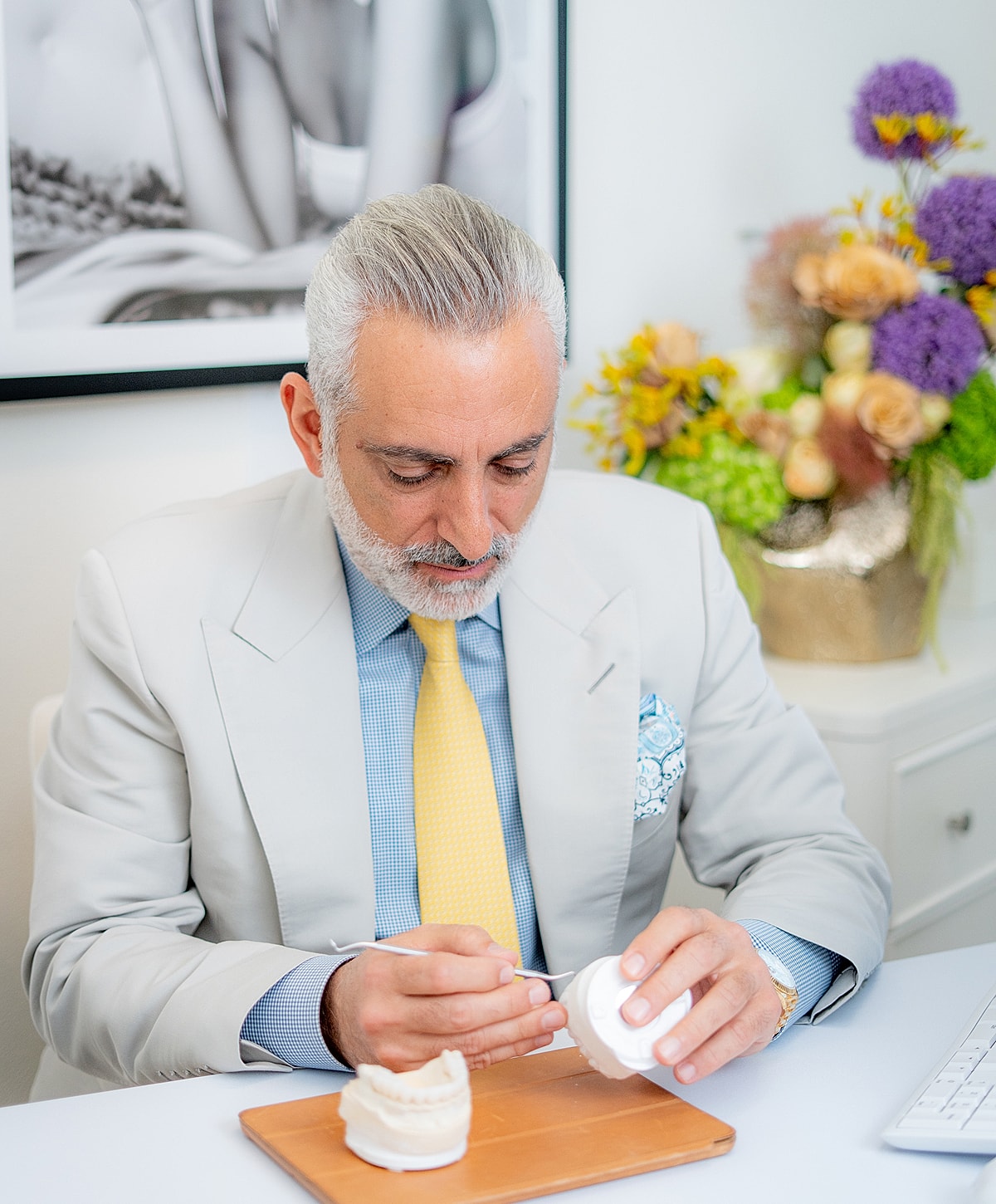
The process of receiving a dental bridge is smooth and comfortable, usually completed over two to three visits.
Your First Visit - Evaluation & Preparation
Dr. Harouni begins with a detailed exam, digital imaging, and a conversation about your goals. If a traditional bridge is right for you, he gently reshapes the supporting teeth so they can hold the bridge securely. The area is fully numbed with advanced anesthesia techniques, so you stay relaxed and pain-free. Precise impressions are then taken and sent to our trusted dental lab.
Before you leave, you will receive a temporary bridge or provisional restoration to protect the prepared teeth and maintain your smile while your final bridge is being made.
Your Second Visit - Fitting & Placement
Once your custom bridge returns from the lab, you will come back for a fitting. Dr. Harouni checks the fit, shape, and bite, making small adjustments so your bridge feels natural and comfortable. When everything looks and feels right, the bridge is bonded in place. In some cases, a brief follow-up visit is scheduled to fine-tune your bite after you have worn the bridge for a short time.

Dental bridges are a dependable way to address several concerns related to missing teeth:
Replaces one lost tooth without the need for a removable partial denture.
Fills a short span of two or more missing teeth to restore chewing on one side of the mouth.
Prevents neighboring teeth from drifting into the empty space, which can lead to bite problems and uneven wear.
Helps re-establish proper contact between the upper and lower teeth, reducing strain on the jaw joints and muscles.
Closes visible spaces so you can smile and speak with confidence.
Choosing a high-quality bridge offers meaningful improvements in both function and appearance:
Improved Chewing and Speaking
Missing teeth can make it hard to bite into foods or chew evenly. A bridge restores a continuous row of teeth so you can enjoy a wider range of foods and speak more clearly.
Support for Facial Structure
Gaps in your smile can cause nearby teeth to shift and may contribute to a sunken look over time. By filling those spaces, a bridge helps maintain the natural shape of your face and supports a more youthful profile.
Natural-Looking Aesthetics
Using modern zirconia and porcelain, Dr. Harouni matches the color, size, and contours of your bridge to your existing teeth. The result is a restoration that blends in so well most people will not notice you have a bridge at all.
Many adults with one or more missing teeth are good candidates for a dental bridge. Ideal candidates have healthy gums, strong supporting teeth or implants, and are looking for a fixed (non-removable) solution to replace missing teeth.
If the teeth next to the gap are weakened, heavily restored, or affected by gum disease, Dr. Harouni will discuss whether they can safely support a bridge or if an implant-supported option would be better. In cases of widespread tooth loss, other treatments such as implant-supported dentures or All-on-4 may be more appropriate. During your visit, you will have time to review all your options, ask questions, and choose the approach that feels right for you.

Most patients return to normal daily activities right after their bridge appointments. Once the numbing wears off, you may notice mild tenderness in the gums or supporting teeth, which usually improves within a day or two and can be managed with over-the-counter pain relief if needed.
While wearing a temporary bridge, it is best to avoid very hard or sticky foods on that side of your mouth. After your permanent bridge is placed, you can gradually resume your usual eating habits, brushing twice a day and flossing carefully around and under the bridge to keep the area clean.
The benefits of a well-fitted bridge are noticeable right away. You will be able to chew more comfortably, smile without visible gaps, and feel more confident in social and professional settings.
With good home care and regular checkups, your bridge can serve you for many years. Dr. Harouni and his hygiene team will show you the best techniques and tools for cleaning around your bridge so it stays stable, comfortable, and attractive over time.

Replacing missing teeth calls for both technical skill and an eye for detail. Dr. George Harouni brings more than 28 years of experience, including decades serving the local community, to every bridge case. As a part-time clinical instructor at the UNLV School of Dental Medicine, he stays current with the latest materials and techniques while teaching future dentists to provide high-quality, patient-centered care.
Our independent practice is built around personal relationships, not volume. We schedule efficiently so you are seen on time, explain each step in clear language, and use advanced anesthesia methods to keep you comfortable. Our bright, open operatories and friendly team help you feel at ease, and our 4.9-star rating from hundreds of Google reviews reflects the trust patients place in us. If you are considering a bridge, we are here to answer your questions and help you choose the option that fits your needs and budget.
With consistent brushing, flossing, and routine dental visits, a well-made bridge can often last ten to fifteen years or more. The lifespan depends on the health of the supporting teeth or implants and how well you care for your gums and bite. Avoiding habits like chewing ice or using your teeth to open packages can also help extend the life of your bridge.
In most cases, no one will be able to tell you have a bridge. Dr. Harouni carefully matches the shade, shape, and surface texture of your bridge to your surrounding teeth. Because we use high-quality, metal-free materials, there is no dark line at the gumline, and the bridge reflects light in a way that closely resembles natural enamel.
The procedure is usually very comfortable. Before preparing the supporting teeth or placing the bridge, Dr. Harouni numbs the area thoroughly. You may feel some pressure or vibration, but you should not feel pain. Any mild soreness afterward typically improves quickly and can be managed with over-the-counter medication if needed.
A dental implant replaces a single tooth root with a titanium post in the jawbone and is then restored with a crown. A bridge, on the other hand, uses the neighboring teeth or implants as anchors to support one or more replacement teeth between them. Implants do not rely on nearby teeth for support, while traditional bridges require reshaping those teeth. During your visit, Dr. Harouni will explain which option best fits your oral health, budget, and long-term goals.